
Categories
Abilene, TXPublished October 2, 2026
Calculating How Much House You Can Afford in Abilene, TX

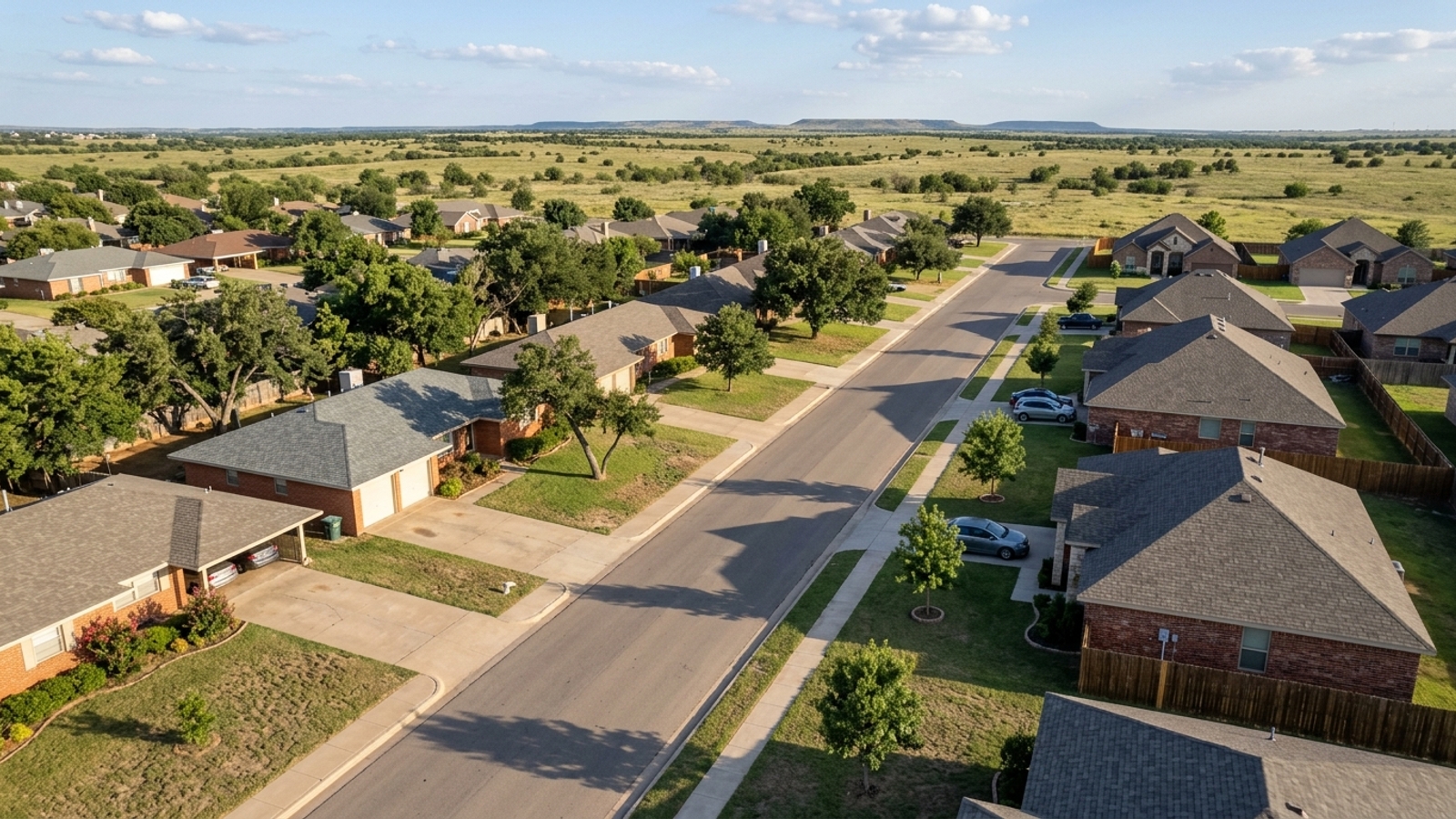
The median sale price for homes in Abilene, TX has been running around $292,000, and homes are spending roughly 20 days on the market before going under contract. This swift market makes preparation essential for first-time home buyers in Abilene, TX. Before you start touring properties, you need to know what price range makes sense for your situation - not just what a listing looks like on paper.
Figuring that out comes down to comparing your gross income against your expected monthly obligations. Lenders use standard ratios to decide how much they'll lend you, and you can run the same numbers yourself. Layer in the Taylor County costs that most online calculators ignore, and you'll have a much more honest read on your purchasing power.
Standard Formulas for Mortgage Approval
Lenders evaluate your financial profile by comparing your gross monthly income to your proposed housing costs and existing debts. Gross income is what you earn before taxes and deductions - so if your household brings in $100,000 a year, your gross monthly income is about $8,333. That's the number underwriters use, not your take-home.
Your Principal, Interest, Taxes, and Insurance (PITI) all have to fit within specific percentage limits. Those limits determine the maximum loan amount you can secure.
The 28/36 Rule Explained
The 28/36 rule is the standard benchmark most mortgage lenders use. The first number - 28 - is the maximum percentage of your gross monthly income that should go toward your total housing payment, which includes the loan principal, interest, property taxes, and insurance.
The second number, 36, is the cap on your total debt load. Your new housing payment plus all other monthly debt obligations combined can't exceed 36% of your gross income. Stay inside both numbers and your approval odds improve considerably.
Debt-to-Income (DTI) Ratio Basics
Your Debt-to-Income (DTI) ratio is just the math behind that second number. It adds up your required monthly minimum payments - auto loans, student loans, credit cards - and divides that total by your gross monthly income.
Say you have an $8,333 gross monthly income and $1,000 in existing debt payments. Your starting DTI is 12%, which leaves 24% of your income available for a housing payment before you hit the 36% ceiling. The less debt you're carrying, the more of that ceiling you can dedicate to your mortgage.
Factoring in Local Taylor County Costs
A home's purchase price is only one piece of the monthly affordability equation. Property taxes and HOA dues vary widely across Texas, and plugging in national averages will throw your budget off in a hurry.
In Abilene, these carrying costs are built directly into your PITI payment, and lenders will fold them into your DTI when they underwrite your loan. Knowing the local rates puts you in a much better position to estimate what a given home will cost you each month.
Property Taxes in Abilene
Effective property tax rates in Taylor County generally run between 1.37% and 2.27% of a home's market value. A typical combined rate covering the county, the City of Abilene, and Abilene ISD sits around 1.37% - but stack all possible taxing units on a specific parcel and that nominal combined rate can push up to 2.27%. Taylor County's standalone rate for 2025 was set at about 0.56% per $100 of value.
The exact percentage depends on where the home sits and which school district boundaries apply, so verify the specific tax rate for any property you're seriously considering. Don't assume.
Homeowners Insurance and HOA Dues
Many neighborhoods in the area belong to a Homeowners Association. The median monthly HOA fee for Taylor County communities is about $250, though costs typically range from $215 to $957 depending on the amenities. For context, statewide Texas HOA fees generally run between $150 and $400 per month.
Lenders include HOA dues in your DTI ratio - even if the fee is billed annually or quarterly, the monthly equivalent counts against your purchasing power. Get the exact HOA dues and an insurance estimate early, before you fall in love with a house.
Worked Examples: Buying a Home in Abilene
As of late September 2026, average 30-year fixed mortgage rates in Texas are running between 7.1% and 7.6%, while 15-year fixed rates are averaging around 6.35% to 6.75%. The examples below use a 7.6% interest rate on a 30-year fixed loan, a property tax rate of roughly 1.5%, and assume the buyer carries $500 in existing monthly debt payments.
Buying with a $75,000 Household Income
A gross income of $75,000 works out to $6,250 per month. The 28% rule allows a maximum housing payment of $1,750, and the 36% rule caps total monthly obligations at $2,250.
With $500 already going toward existing debt, the maximum available housing budget lands at exactly $1,750. At 7.6% with typical taxes and insurance, that payment supports a loan amount of roughly $200,000. Buying a home at Abilene's $292,000 median price at this income level means you'd need a substantial down payment to close the gap between what you can borrow and what the home costs.
Buying with a $120,000 Household Income
At $120,000 a year, gross monthly income is $10,000. The 28% rule allows a $2,800 housing payment; the 36% rule limits total monthly debt to $3,600.
Subtract the $500 in existing debt, and you've got $3,100 available - enough headroom to comfortably max out the $2,800 housing allowance. At a 7.6% rate with estimated local taxes, a $2,800 monthly payment covers a loan of about $325,000. A buyer at this income can afford a median-priced Abilene home with a standard down payment.
How Down Payments Change Your Monthly Math
The median sale price of $292,057 in Abilene sets the baseline for how much cash you need to close. A traditional 20% down payment on a median-priced home is roughly $58,400. Bring that much to the table and you reduce your loan balance, lower your monthly PITI, and avoid an extra monthly charge that we'll get to in a moment.
That said, you don't need 20% down to buy a house here. Conventional loans often allow as little as 3% down, while FHA loans require 3.5%. The trade-off is straightforward: smaller down payment means a larger loan balance and higher monthly obligations.
First-Time Buyer Programs in Texas
Texas offers assistance to first-time buyers through the Texas Department of Housing and Community Affairs (TDHCA) and the Texas State Affordable Housing Corporation (TSAHC). Both agencies provide down payment assistance up to 5% of the loan amount, structured as either a forgivable grant or a 0% second-lien loan.
TDHCA runs "My First Texas Home" and TSAHC offers the "Home Sweet Texas" program. Both generally require a minimum credit score of 620. Eligible buyers can also use the Texas Mortgage Credit Certificate (MCC) to save up to $2,000 a year on federal taxes - that's real money worth running down.
Avoiding Private Mortgage Insurance (PMI)
Put down less than 20% on a conventional loan and lenders will require you to pay Private Mortgage Insurance (PMI). This monthly fee protects the lender if you default, and it's added directly to your monthly housing payment - which shrinks the principal amount you can afford to borrow.
Factor PMI into your 28% housing ratio if a smaller down payment is part of your plan. Once you reach 20% equity in the home, you can typically request to have it removed.
Frequently Asked Questions
What is the 28/36 rule for buying a house?
The 28/36 rule is a standard guideline lenders use to assess affordability. Your housing payment shouldn't exceed 28% of your gross monthly income, and your total debt payments shouldn't exceed 36%.
How do property taxes in Abilene affect my affordability?
They increase your monthly housing payment directly. In Taylor County, effective tax rates typically range from 1.37% to 2.27% of the home's market value, and lenders include that cost in your debt-to-income ratio when they underwrite your loan.
How much down payment do I need in Abilene?
You don't need 20% down to buy a home in Abilene. Conventional loans allow as little as 3% down and FHA loans require 3.5%, though putting down less than 20% means you'll pay Private Mortgage Insurance (PMI). First-time buyers may also qualify for Texas state programs through TDHCA and TSAHC that provide up to 5% in down payment assistance.
What annual salary do I need to afford a median-priced home in Abilene right now?
It depends on your down payment and existing debts. With a 7.6% interest rate, a median home price around $292,000, and typical local taxes, a buyer with minimal debt generally needs a household income near $90,000 to $100,000 to keep the payment within the 28% rule.
How do my existing car payments and student loans impact my Taylor County home buying budget?
They reduce the income you can put toward a mortgage. Lenders cap your total monthly debt at 36% of your gross income, so significant car or student loan payments will lower the maximum loan amount you can qualify for.
Are there local first-time homebuyer programs in Abilene that can increase my purchasing power?
Yes. Buyers in Abilene can access state-level programs through TDHCA and TSAHC. Both agencies offer 30-year fixed mortgages and down payment assistance up to 5% of the loan amount for buyers with a credit score of at least 620.
Do state assistance options offer any tax benefits?
Yes, eligible buyers can utilize the Texas Mortgage Credit Certificate to save up to $2,000 a year on their federal taxes. Combining this certificate with other homebuyer programs in Abilene can improve your overall affordability. Keeping more of your income at tax time makes it easier to manage your monthly housing obligations.

Amber Kimmel
| Kimmel Collective Real Estate Team | Keller Williams Realty
or another way